
31°C, New York


Notification products, updates
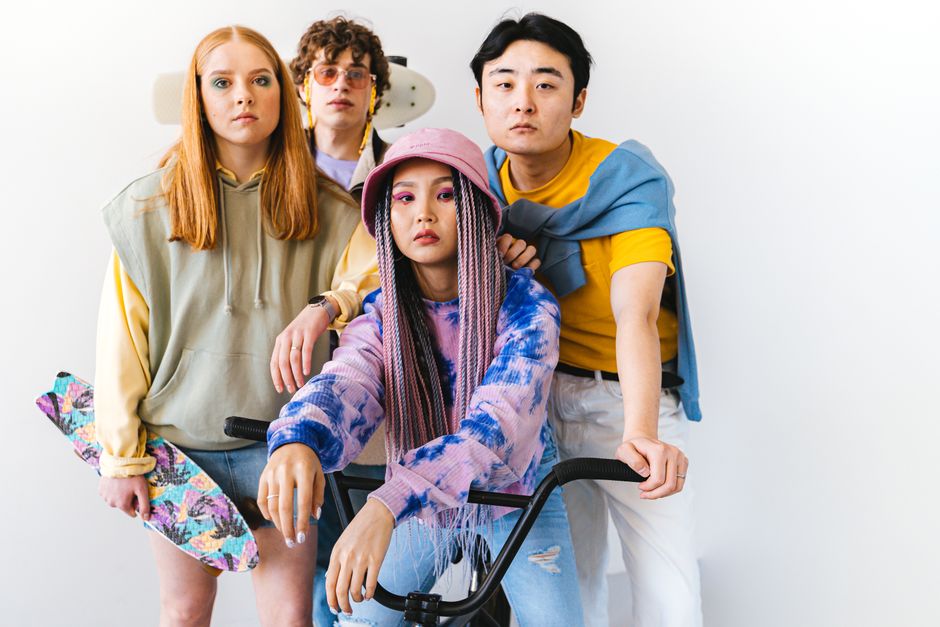
For petite outfits, the point is not so much to add height as to distribute visual weight. If an outfit seems top-heavy, bottom-heavy or just overwhelming, proportion is usually the problem, not your frame. Tweaking where hems sit, where the waist falls and how large details are can give a wardrobe a calm, considered feel. You are aiming to appear in control of the clothes, not as if the clothes are in control of you. It is a topic closely linked to leather jackets, which comes up more than once below.
Viewing an outfit as a collection of blocks and lines is a helpful place to start. Lines are the seams, edges and accessories that run through the blocks, which are the areas of colour and fabric. Even in straightforward combinations, sensible placement of blocks and lines gives a petite frame a balanced look.
The waist usually provides the most powerful horizontal line in an outfit. Set at your natural waist or a little higher, it gives the eye a clear halfway point and keeps tops from swamping your hips. High-rise skirts and trousers achieve this subtly, notably if the rise lies flat on the body instead of bunching.
Just as much depends on hemlines. A skirt ending at the slimmest part of your leg, frequently just above or below the knee, generally appears more thoughtful than one finishing midway down the calf. A cropped length that shows some ankle, or a clean break at the ankle, stops trousers from making the lower half look weighty. Should you want a long hem, go for a straight or slightly tapered cut rather than a broad, pooling one.
Layering works according to the same principle. The waist stays visible with a cropped jacket or short cardigan ending at the high hip, whereas a long unstructured layer can obscure it completely. When longer layers appeal to you, pick a style that is narrow through the body and wear it open so the vertical line stays clear.
An outfit can feel taller and more coherent when vertical lines draw the eye up and down. A slim column of colour, like a jumper and trousers in similar shades, achieves it with no effort. A straight cardigan or an open shirt, as a long open layer, also gives two neat vertical edges. If you want to dig deeper, custom leather jackets is a useful place to start.
Keeping the lines narrow and considered is the secret. A jacket that fits more closely through the body maintains a tidy line, while a boxy one worn open can create width. Rather than flaring outwards, lapels, plackets and scarves should be chosen to sit near the body. Vertical does not have to mean severe; a soft knit dress or a straight-leg trouser in one colour can feel relaxed and still do the job.
While tiny details can look mean, big-scale ones can overpower a petite frame. A collar that stops at your shoulders, a medium bag tucked under your arm and jewellery scaled to your natural proportions all make a clearer impression. Prints behave likewise, with a small dense pattern looking busy and an oversized pattern dominating. A moderate print scale with a little negative space tends to give the best balance.
Sleeve length and neckline depth are two more things to think about. While sleeves bunching at the hand create clutter, those ending at the wrist bone or just above appear neat. Without broadening the shoulders, a neckline that opens the chest, like a V or soft scoop, allows the face room.
Necklaces and scarves are typical places where scale can go wrong. Against a heavy knit a delicate chain may vanish, while a chunky scarf can create bulk near the face. Near the face, let one element be the focus and keep the remaining details quiet.
Cutting the body in half at the waist is a frequent reason why a petite outfit seems off. Instead, use thirds: a mid-layer that ends at the high hip, a top that stops around the hip bone, and a bottom that extends to the ankle. Rather than one horizontal block, this makes a staircase of lengths.
Colour offers another way to use this principle. The eye keeps moving when a dark base layer, a lighter mid-layer and a third tone at the shoe are combined. For a simpler palette, keep the colours near each other and let lengths carry the work.
Think of thirds as guidance, not as a rule. Certain outfits, like a dress or jumpsuit, are best with a single long line and can look equally balanced. The aim is to steer clear of accidental halves that chop up the outfit.
A petite frame can look as if it is wearing another person's jacket when the shoulder seams sit past the natural shoulder line. Shortening the sleeve or taking in the shoulder can be done by a tailor at modest expense. When sleeves stop at the wrist bone instead of the middle of the hand, a coat or blazer instantly looks more considered.
You can make few adjustments more effective than taking up a hem. While a clean ankle break will not, trousers pooling at the shoe make you appear shorter. So the waist sits at your body's natural bend, waistbands, particularly on skirts, can be moved or taken in.
Without drawing attention, shoes in the same tone as your trousers or tights lengthen the leg line. A pointed toe or a small heel may assist, but shape counts for more than height. For the leg to appear as one continuous line, shoes with heavy ankle straps should be avoided.
These adjustments call for no new wardrobe, only attention to hems, waists, detail scale and line. With a little tailoring and a clearer eye for proportion, an outfit can feel considered rather than accidental. The reward is not a different height or frame, but a clearer version of yourself and a faster, calmer way to get dressed. Use these points as a starting place for anything related to leather jackets.

Kileys shares practical, down-to-earth guidance on british family home, food and days out for readers across the UK.
Stay Tuned With Updates


Leave A Comment